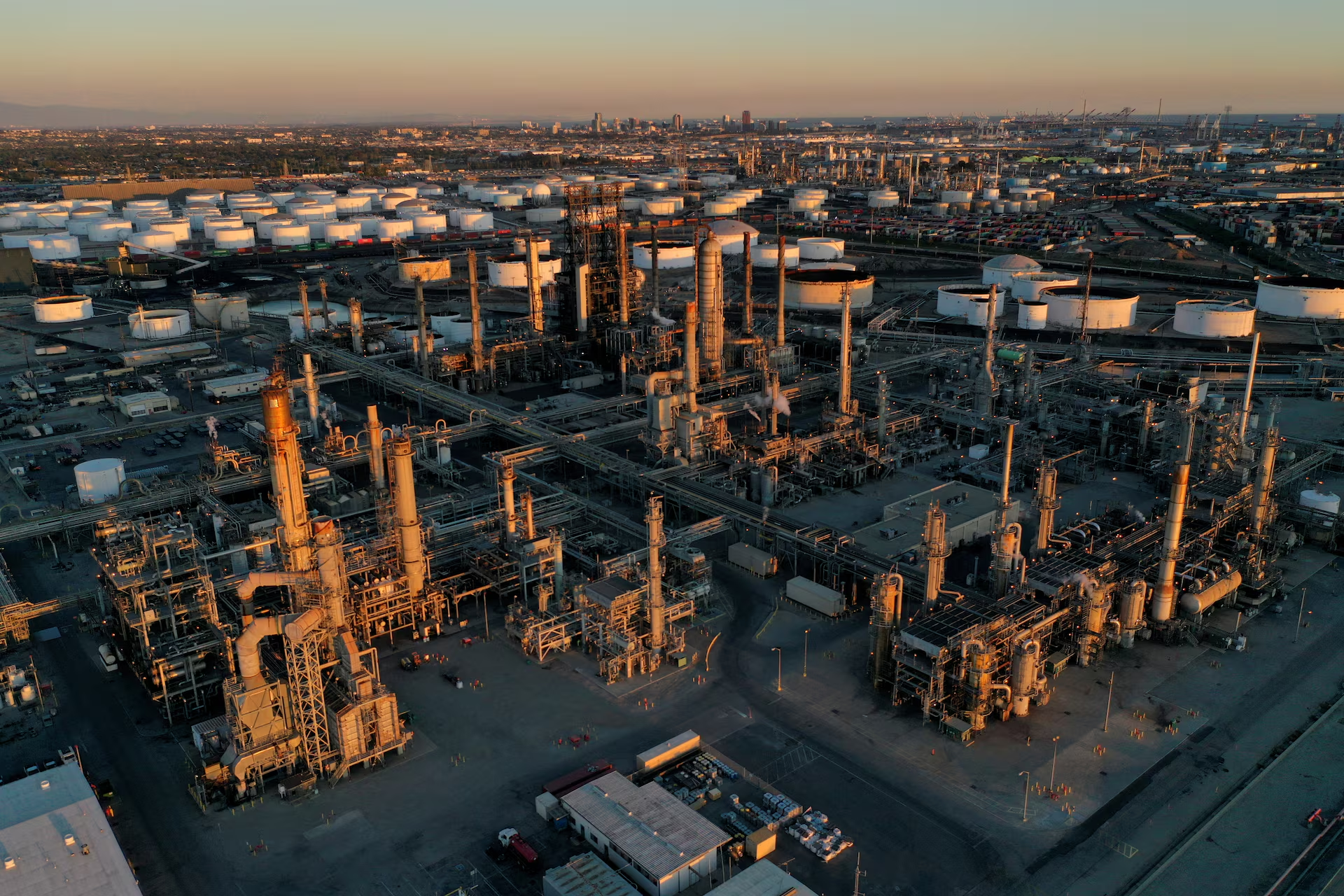
California’s gasoline market is facing renewed pressure as refinery closures threaten to tighten supplies and push pump prices even higher in the nation’s most expensive fuel market.
Industry analysts warn that the shutdown of two major refineries could leave the state increasingly reliant on imports, exposing drivers to sustained price increases.
One Los Angeles-area refinery is scheduled to close at the end of the month, followed by a Bay Area facility in April.
Together, these two plants account for roughly 17% of California’s gasoline supply.
Prices already far above national average
California motorists are already paying some of the highest fuel prices in the United States, averaging about $4.32 per gallon.
That is roughly 50% higher than the national average, placing an added burden on households and businesses.
According to Andy Lipow, president of Lipow Oil Associates, the refinery closures could add another 50 cents per gallon to prices.
“The loss of the refineries are certainly going to result in California having much shorter gasoline supplies,” Lipow said.
“The price of gasoline in California will rise on a sustained level, because it’ll have to attract imported gasoline month in and month out.”
Risk of shortages grows
Beyond higher prices, analysts caution that the closures increase the risk of physical shortages across the state.
California would be left with just six operating refineries, leaving little margin for error if one experiences an unplanned outage.
This vulnerability has already been highlighted by the Martinez refinery, which suffered a fire in February and has yet to return to normal capacity.
Tom Kloza, a veteran oil analyst with Gulf Oil, said fewer refineries dramatically amplify the impact of disruptions.
“When you have 10 refineries and two are down for planned or unplanned maintenance, it’s no big deal,” Kloza said.
“But when you have only six, and one of them is down — God forbid you have a fire — you’re in trouble. It’s then a market that can easily go to $5 to $6 a gallon.”
Taxes and regulations add pressure
California’s fuel prices are also shaped by some of the highest taxes and environmental costs in the country.
The state imposes a gasoline tax of nearly 71 cents per gallon, more than double the national average.
In addition, a carbon tax paid by retailers and distributors is passed on to consumers, adding an estimated 20 to 25 cents per gallon.
“California is not like the United States. They’re serious about suppressing carbon,” Kloza said.
He expects the national average gasoline price to fall to around $2.75 per gallon, while California prices remain elevated.
“Where rest of the country will probably see lower prices in 2026 than 2025, I wouldn’t bet that’ll be the case for California,” he said.
Refineries exit a ‘challenging’ market
Refinery operators point to high costs and regulatory uncertainty as key reasons for pulling back from California.
Phillips 66 described its Los Angeles refinery as a “challenged asset,” citing the expense of operating under state rules.
Valero, which is closing its Bay Area refinery, pointed to regulatory costs and uncertainty in filings explaining its decision.
State officials, however, say they are confident supplies will remain adequate.
They argue that imports and shifting demand patterns will offset reduced in-state refining capacity.
“As California refining capacity decreases over time, the state will import less crude and more refined oil products,” the California Energy Commission said.
“Overall demand for oil will decline as the transportation sector shifts to electricity and other clean, alternative fuels.”
EV growth offers only partial relief
Electric vehicles are beginning to curb gasoline demand, but their impact remains limited for now.
Only about 6% of vehicles on California roads are fully electric or plug-in hybrids.
However, nearly a quarter of new car sales in the state this year were electric, driven in part by incentives and emissions targets.
Industry groups warn that refinery exits could weaken the system further.
“These companies are making business decisions years down the road and decided that California is a difficult place to do business,” said Jodie Muller of the Western States Petroleum Association.
With continued closures, she said, prices are likely to rise and disruptions could become more frequent.