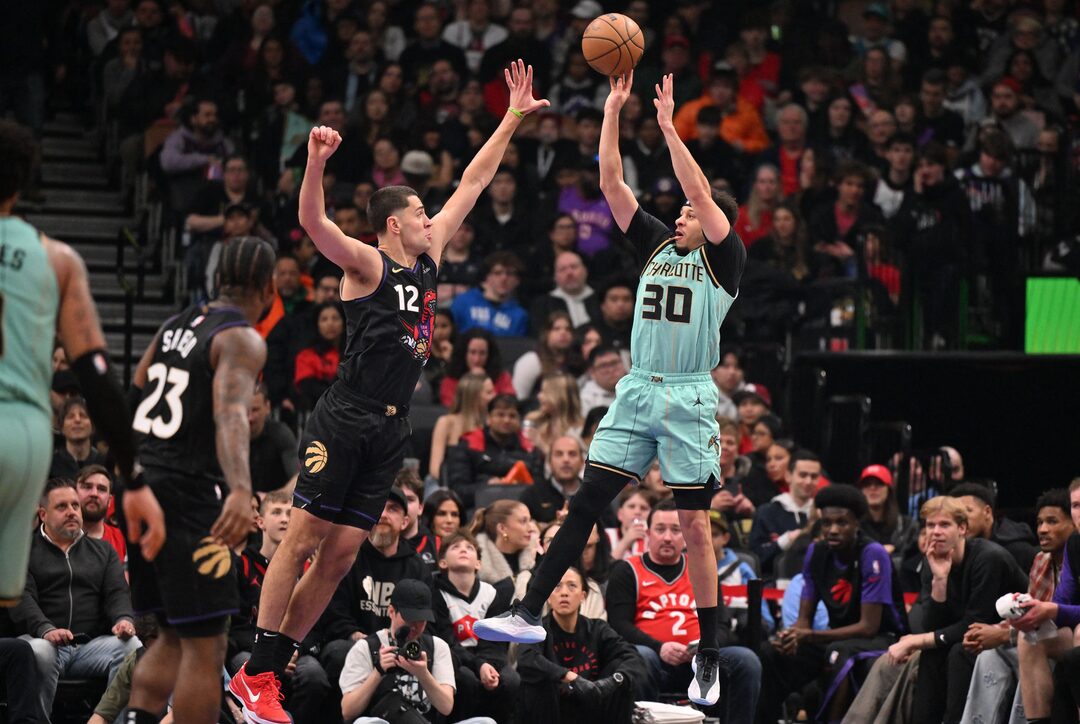
The Charlotte Hornets vs Toronto Raptors timeline shows how these two NBA clubs have performed, with key match player stats.
The rivalry between the Charlotte Hornets and the Toronto Raptors has been defined entirely in the regular season, as the two teams have never met in the playoffs. The Hornets, established in 1988, entered the league as a vibrant expansion team, while the Raptors joined the NBA in 1995, also as an expansion franchise. Their first matchups in the mid‑1990s showcased a young Raptors team trying to find its footing against the more experienced Hornets, who boasted athletic backcourt players and skilled frontcourt scorers. Early contests were closely fought, with neither team able to consistently dominate.
Throughout the late 1990s and early 2000s, the two franchises met regularly in balanced and competitive games. The all-time regular-season head-to-head is close, with the Raptors holding a slight edge of 52 wins to Charlotte’s 51. During this era, the Hornets leaned on veteran scorers and outside shooting, while Toronto gradually strengthened through international recruits and defensive focus. Neither team managed extended winning streaks over the other, making every matchup unpredictable and exciting for fans.
In the 2010s, the rivalry evolved as Toronto established itself as a playoff contender, while Charlotte, temporarily renamed the Bobcats, experienced frequent rebuilding years. Raptors games often showcased their perimeter shooting and transition offense, while the Hornets relied on young players and occasional hot streaks to secure victories. Notable individual performances defined many of these games, including standout efforts from LaMelo Ball and Miles Bridges for Charlotte, and DeMar DeRozan and Kyle Lowry for Toronto during their respective peaks.
The 2022–23 season highlighted Toronto’s continued strength against Charlotte. Raptors victories often came through fast breaks and efficient shooting nights, with final scores such as 120‑100, 128‑108, and 132‑120 illustrating their offensive dominance. Charlotte occasionally challenged but struggled to contain Toronto’s perimeter scoring. In 2023–24, the teams played closer games, including a 111‑106 Raptors win in Toronto and a 123‑117 victory in Charlotte. LaMelo Ball and Rudy Gay led the Hornets’ scoring, but Raptors defense limited their effectiveness in the final quarters.
During the 2024–25 season, Toronto maintained an edge in most encounters. A key 126‑96 win saw rookie Jonathan Mogbo record a triple-double with 17 points, 10 rebounds, and 11 assists. Jakob Poeltl’s inside scoring and rebounding, combined with contributions from Scottie Barnes, helped secure a 108‑97 victory in another matchup. Charlotte, however, capitalized on injuries and hot shooting nights to take a 138‑133 home win, with Tre Mann scoring 27 points and Cody Martin adding 25. The season demonstrated the Hornets’ potential when their bench production and perimeter shooting aligned.
The early 2025–26 season saw tighter contests, including a 110‑108 Raptors win on November 17, 2025, with RJ Barrett hitting a decisive basket late. The Hornets responded with back-to-back victories on November 29 and December 5, including an overtime triumph and a 111‑86 road win, highlighting their improving scoring depth and defensive adjustments. These early games indicated a potential shift toward a more evenly matched rivalry in the coming seasons.
Statistically, head-to-head games have generally been balanced. Both teams average around 101 points per game against each other, with field goal percentages and rebounds closely matched. Assists and turnovers have also been comparable, reflecting the competitive nature of their meetings. Over the years, key players have emerged as central figures in the rivalry. For the Raptors, Scottie Barnes provides versatility as a scorer and rebounder, RJ Barrett contributes clutch late-game points, and Jakob Poeltl dominates inside. For the Hornets, LaMelo Ball drives the offense as a playmaker, Miles Bridges offers athletic scoring, and younger talents like Brandon Miller and Nick Richards provide growing contributions.
Looking at patterns over decades, Toronto has frequently relied on strong perimeter shooting and defensive rotations, while Charlotte often leverages speed, athleticism, and balanced scoring from multiple players. Games have often been decided in the final minutes, with one or two players making decisive contributions. The rivalry, though lacking playoff intensity, has offered consistent entertainment and showcased emerging talent from both franchises.
The long-term head-to-head record highlights the even nature of this matchup. The Raptors have a narrow advantage, 52‑51, across 103 regular-season games. Individual game results fluctuate, with alternating winning streaks and tightly contested finishes. Both teams have had periods of dominance and rebuilding, reflecting the evolving rosters and strategies employed over the years. The rivalry has remained competitive despite the absence of postseason encounters, with each season offering opportunities for new narratives and standout performances.
Key elements of the rivalry can be summarized as follows:
- The Hornets and Raptors have never met in the playoffs, making the regular season the sole context for the rivalry.
- Toronto holds a slight advantage with 52 wins compared to Charlotte’s 51 in 103 games.
- Both teams have alternated winning streaks, with individual games often decided in the final minutes.
- Standout performers for Toronto include Scottie Barnes, RJ Barrett, and Jakob Poeltl.
- Charlotte’s key contributors include LaMelo Ball, Miles Bridges, Tre Mann, Cody Martin, and Brandon Miller.
- Scoring averages, field goal percentages, and rebounds are closely matched across all head-to-head games.
- The rivalry has evolved with changing rosters, injuries, and emerging talent, ensuring unpredictability in every meeting.