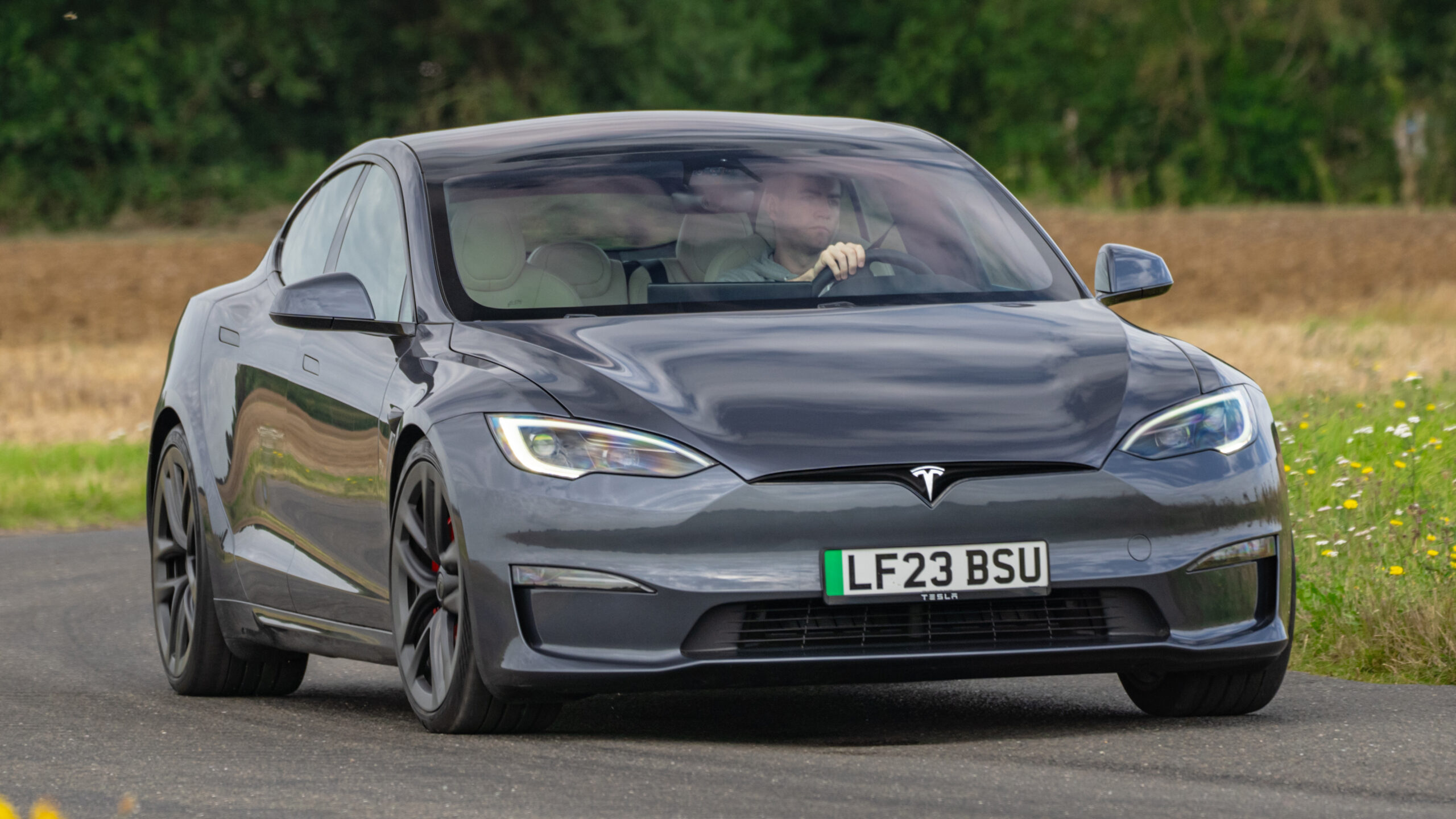
Tesla’s already difficult start to 2026 got more uncomfortable on Monday when JPMorgan reiterated its bearish stance on the stock, reaffirming an Underweight rating and a $145 December 2026 price target that implies roughly 60% downside from where the stock is currently trading.
The note, authored by analyst Ryan Brinkman and his team, characterised Tesla as overvalued against the backdrop of Q1 delivery disappointments and what JPMorgan describes as a growing inventory of unsold vehicles that will put pressure on free cash flow through the rest of the year.
Tesla delivered 358,023 vehicles in Q1 2026, a figure that fell below analyst expectations despite representing modest year-on-year growth from Q1 2025’s 336,681 units. The sequential decline from Q4 2025’s 418,227 deliveries was the more alarming number for those monitoring the company’s trajectory, and the stock fell 5.4% on the day results were published.
Tesla has been trading around $361, deep below the $400-plus levels where it spent much of 2025, and the Q1 miss has done nothing to support the view that a recovery is building.
JPMorgan’s note is unusually pointed in its language for a mainstream sell-side analysis. Brinkman’s team wrote that they “continue to see large 60% downside to our $145 December 2026 price target and advise investors approach TSLA shares with a high degree of caution.” That framing is not the language of analysts who see a potential buying opportunity — it is a recommendation that reads as a genuine call to reduce or exit positions based on a fundamental assessment of where the company sits relative to its current valuation.
The Q1 numbers themselves tell a straightforward story. Model 3 and Model Y deliveries, which account for the bulk of Tesla’s volume, came in at 341,893 units, while other models — including Cybertruck and Semi — added 16,130. Production reached 408,386 vehicles across the quarter, meaning the gap between production and deliveries continues to widen into inventory levels that will eventually need to be resolved through either price reductions or production cuts, both of which carry their own financial consequences.
There is also a dimension to Tesla’s current situation that goes beyond delivery numbers. Elon Musk’s involvement in the Trump administration through DOGE has generated significant consumer backlash in several markets, with protests at Tesla dealerships documented across the US and Europe in recent months.
While the financial impact of any reputational damage is inherently difficult to quantify, Tesla’s performance in markets like California and Germany — where EV adoption rates are highest and political sensitivities around Musk’s political activity are most acute — will be worth watching in Q2 data.
The Iran war adds an additional layer of complexity to Tesla’s energy storage business, which delivered 8.8 GWh in Q1 2026. With electricity prices rising alongside oil costs and grid operators seeking resilience solutions, the energy storage opportunity is legitimately growing.
But the core automotive business dominates the stock’s valuation story, and until delivery trends stabilise and the inventory situation is resolved, the bear case outlined by JPMorgan will continue to attract adherents among institutional investors managing positions through what remains a very difficult macro environment for discretionary consumer spending.