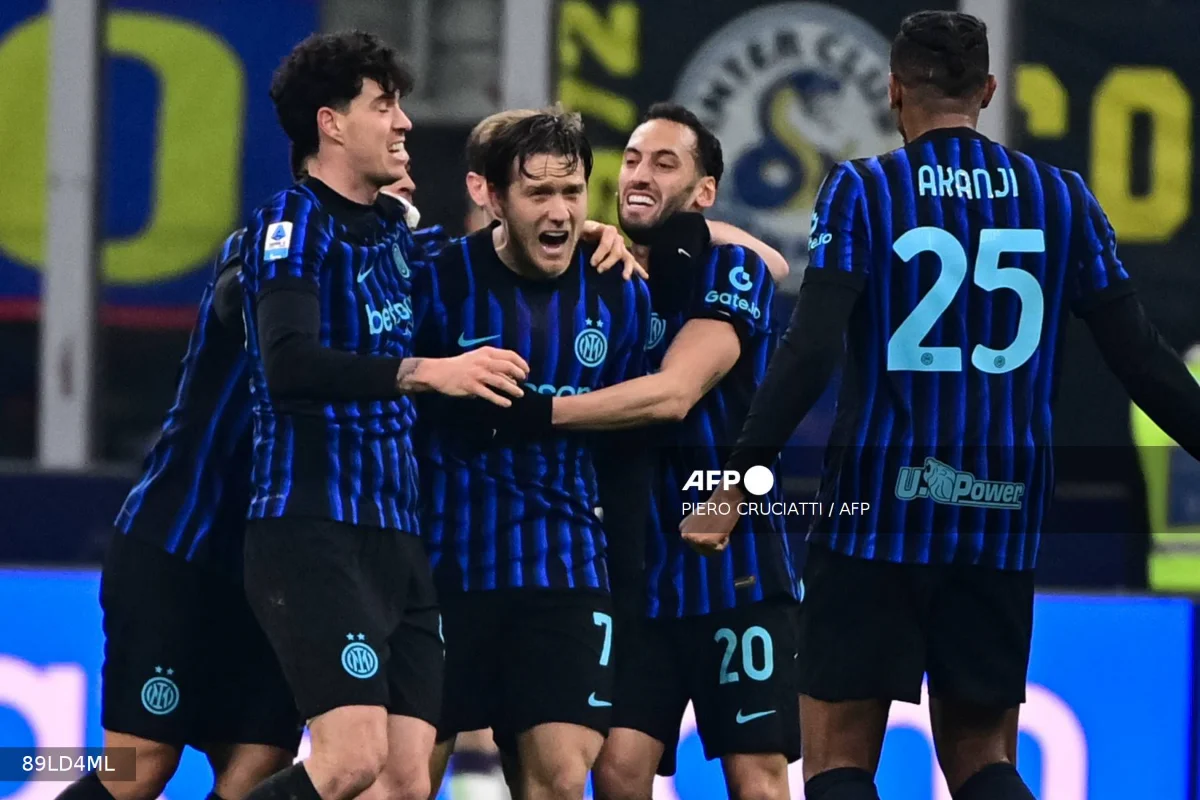
There are two parallel stories unfolding in Italian football right now, and they are related in ways that go beyond coincidence. On the domestic front, Inter Milan are closing in on their 21st Scudetto in what has been a genuinely competitive Serie A season. On the international front, Italy face Northern Ireland in a World Cup qualification play-off on March 26 in Bergamo, having finished second in their qualifying group behind Norway.
That combination — domestic vitality, international fragility — captures something uncomfortable about where Italian football sits in the global order.
The play-off situation requires some context. Italy must win a single-leg semi-final against Northern Ireland and then face either Wales or Bosnia in a second match on March 31 for a guaranteed World Cup berth. Northern Ireland, ranked 60th in the world with a population of 1.9 million, represent precisely the kind of opponent that a nation with Italy’s football history and infrastructure should never be playing in a must-win knockout format.
But here they are, for the third consecutive qualification cycle, forced to navigate the play-off system to reach a tournament being hosted across Canada, Mexico, and the United States, where Italy’s cultural reach and the 16 million Italian Americans in North America represent enormous commercial significance.
The national team situation is being managed by Gennaro Gattuso, who has had to prepare for the crucial fortnight with a squad already thinned by injury. Lazio winger Mattia Zaccagni was ruled out with a muscular problem sustained during his club’s recent 1-0 defeat, and Marco Verratti is also unavailable through injury, depriving Gattuso of one of his most experienced options.
The loss of those two figures is meaningful in different ways: Zaccagni offers creative width, while Verratti provides the kind of midfield intelligence and ball security that quietens nerves in high-pressure match environments.
The Champions League story compounds the picture considerably. All three of Italy’s biggest clubs went out in the round of 16. Inter were eliminated by Bodo/Glimt, the Norwegian champions, in a tie that raised deeply uncomfortable questions about the structural gap between Serie A’s elite and the relentless physical and tactical intensity that Scandinavian and northern European football has developed over the past decade. Juventus and Napoli also exited in the last 16. The last time an Italian club won the Champions League was Inter’s triumph under Jose Mourinho in 2010, fifteen years ago, while Spain has added seven titles in that same window and England five.
Serie A currently holds second place in UEFA’s club coefficient rankings, a position that reflects historical accumulation rather than recent European performance, since not a single Italian club has progressed to the quarter-finals of the Champions League this season.
The contrast with the Scudetto race, which has been genuinely enthralling and technically sophisticated, is real and worth noting. The domestic product is improving; the European translation is not keeping pace.
One analysis circulating among Italian football commentators points to a tactical and physical gap that the Inter versus Bodo/Glimt tie made visible. The Norwegian side played what some described as “old-school Italian style” — high-intensity pressing, extraordinary physical conditioning, a collective system so precise that individual quality gaps became largely irrelevant over 180 minutes.
That framing is pointed: the football model that made Serie A dominant in the 1980s and 1990s has been adopted, refined, and industrialised by clubs with far smaller budgets and fanbases. Atalanta, under Gian Piero Gasperini, have long been proof that the approach works within Italy. The question of why it hasn’t been replicated more broadly at the highest European level remains unanswered.
Gattuso’s squad announcement is expected imminently, and the choices he makes in midfield in particular will signal whether Italy intend to play conservatively and manage their way through the play-offs or whether the coaching staff believes a more expansive approach gives the national team the best chance of reaching the tournament. Northern Ireland will arrive in Bergamo with the advantage of playing without fear and nothing to lose, exactly the dynamic that has caused Italy problems in qualifying over recent cycles. How Italy respond to that pressure, and whether the club-level chaos of recent months translates into collective determination or collective anxiety, will define not just whether they reach the World Cup, but what kind of story Italian football is telling about itself in 2026.