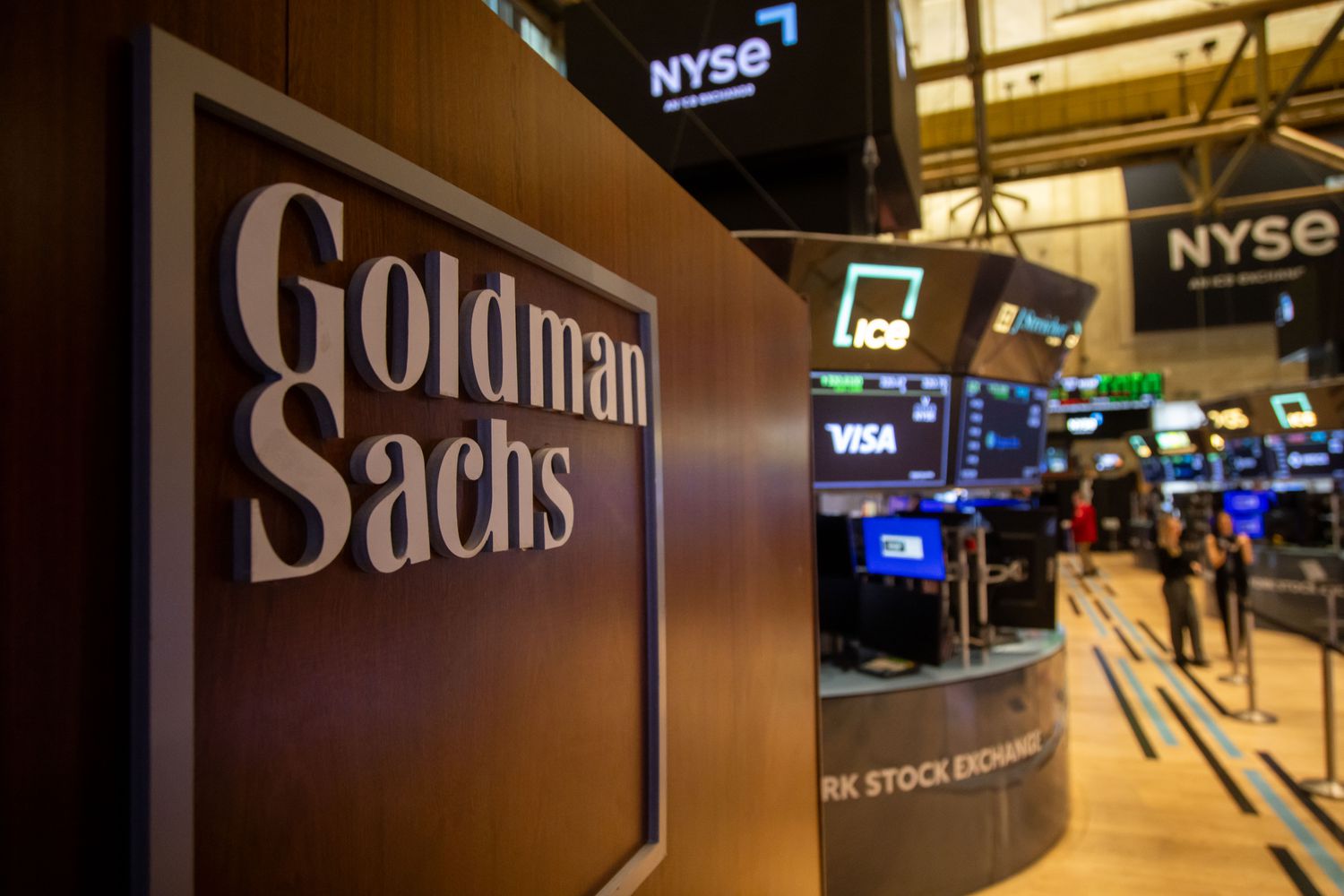
Goldman Sachs reported its second-highest quarterly revenues in company history on Monday morning, beating analyst forecasts comfortably on earnings and revenues while delivering a record performance from its equities trading desk.
Yet by the time markets had absorbed the numbers, the stock had fallen roughly three percent — a reaction that says more about the complexity of the current macro environment than it does about Goldman’s underlying business.
Earnings per share came in at $17.55 against a consensus estimate of $16.47, a beat of 6.56 percent. Net revenues reached $17.23 billion against expectations of roughly $16.97 billion, representing a 14 percent increase from the same period last year.
The bank reported net earnings of $5.63 billion, with an annualised return on equity of 19.8 percent — a figure that reflects genuine operational strength.
The engine of the result was Global Banking and Markets, where net revenues hit $12.74 billion — the highest in the segment’s history. Investment banking fees surged 48 percent year-on-year to $2.84 billion, with advisory revenues jumping 89 percent to $1.49 billion as M&A activity remained robust through a turbulent geopolitical period. Equities revenues rose 27 percent to $5.33 billion, approximately $420 million above StreetAccount estimates, driven by prime brokerage activity and cash equities matching.
The miss that unnerved investors arrived in fixed income, where revenues fell 10 percent to $4.01 billion, approximately $910 million below expectations. Goldman cited weakness in interest rate products, mortgages and credit for the shortfall — sectors that have become sensitive barometers of uncertainty around the Iran war and its impact on global capital allocation.
CEO David Solomon addressed the tension directly on the post-earnings call. “Goldman Sachs delivered very strong performance for our shareholders this quarter, even as market conditions became more volatile,” Solomon said in the earnings release.
“The geopolitical landscape remains very complex — so disciplined risk management must remain core to how we operate.” His guidance on M&A suggested cautious optimism rather than confidence, noting he was closely monitoring how the Iran war might eventually affect corporate dealmaking appetite.